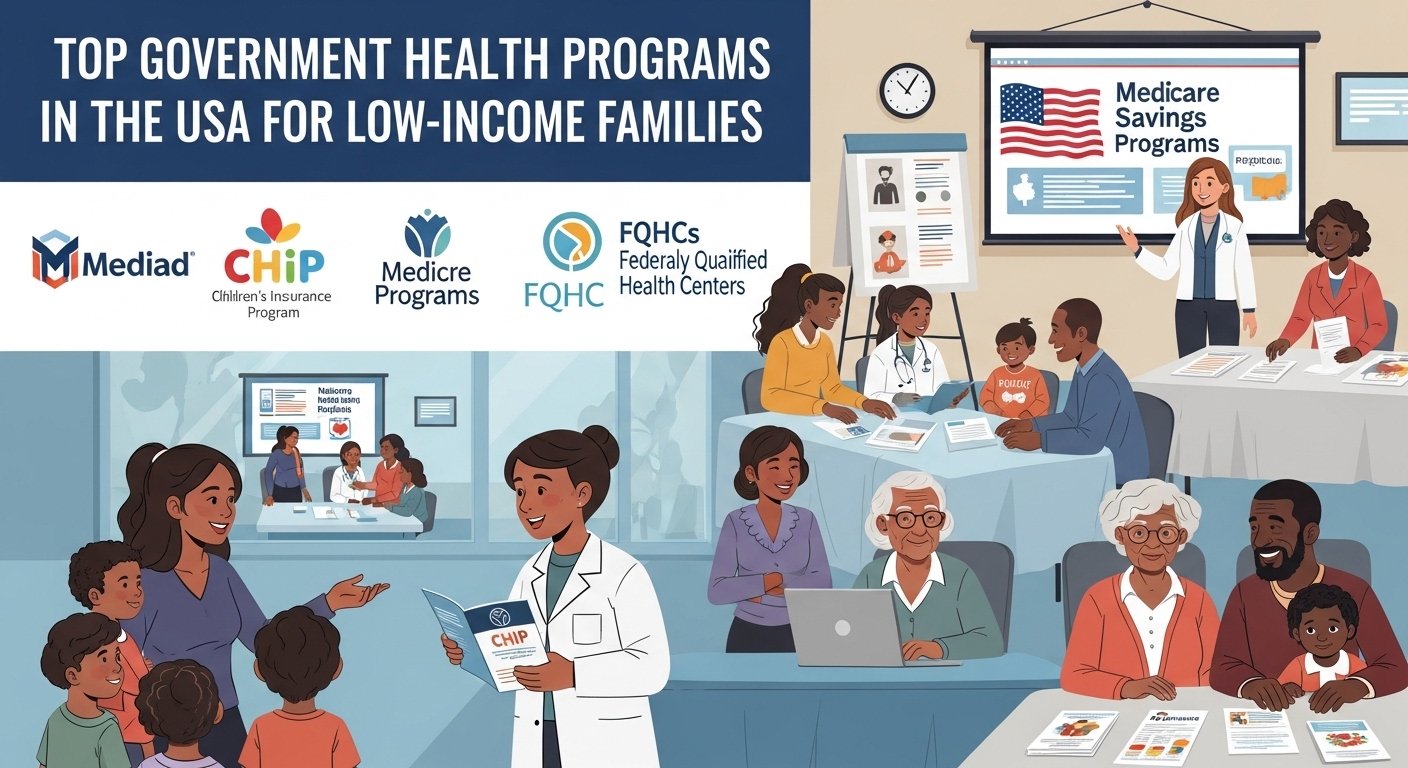
The U.S. government offers several health programs aimed at supporting low-income families. Here are some of the top programs:
- Medicaid:
- Provides free or low-cost health coverage to eligible low-income individuals and families.
- Benefits include hospitalization, doctor visits, preventative care, and more.
- Eligibility varies by state, with many states expanding coverage under the Affordable Care Act.
- Children’s Health Insurance Program (CHIP):
- Offers health insurance to children in families with incomes too high to qualify for Medicaid but too low to afford private coverage.
- Covers routine check-ups, immunizations, doctor visits, prescriptions, dental, and vision care.
- Affordable Care Act (ACA) Marketplace:
- Provides access to health insurance plans with subsidies available for low-income individuals and families.
- Organizes Open Enrollment periods where families can sign up for health coverage.
- Supplemental Nutrition Assistance Program (SNAP):
- While primarily a nutrition program, SNAP also plays a crucial role in supporting overall health by ensuring low-income families have access to food.
- Proper nutrition directly impacts health outcomes.
- Women, Infants, and Children (WIC):
- Offers nutrition assistance and education to low-income pregnant women, new mothers, and young children.
- Provides access to healthy foods and nutrition counseling to improve health and development.
- Community Health Centers:
- Provide comprehensive health services, including primary care, dental care, and mental health services, regardless of ability to pay.
- Serve many low-income individuals and often operate on a sliding fee scale based on income.
- Ryan White HIV/AIDS Program:
- Provides medical care, supportive services, and medications for low-income individuals living with HIV/AIDS.
- Helps those without sufficient health insurance coverage to access necessary treatment.
- Indian Health Service (IHS):
- Provides health services to American Indians and Alaska Natives, ensuring access to care for low-income populations in these communities.
- Head Start and Early Head Start:
- Although primarily focused on early childhood education, these programs also address health services, including screening and referrals for health care.
- Medicare Savings Programs:
- Help pay for some or all of the Medicare premiums, deductibles, and coinsurance for qualifying low-income individuals.
Additional Resources:
- Local health departments and non-profit organizations often provide additional assistance and services tailored for low-income families.
- Online tools and helplines are available to help families navigate their options based on specific needs and circumstances.